
Discover world-class fly fishing on the Kolpa River in Slovenia. Catch wild brown trout, elusive grayling, and legendary hucho in crystal-clear water surrounded by unspoiled nature, rich culture, and authentic local experiences.
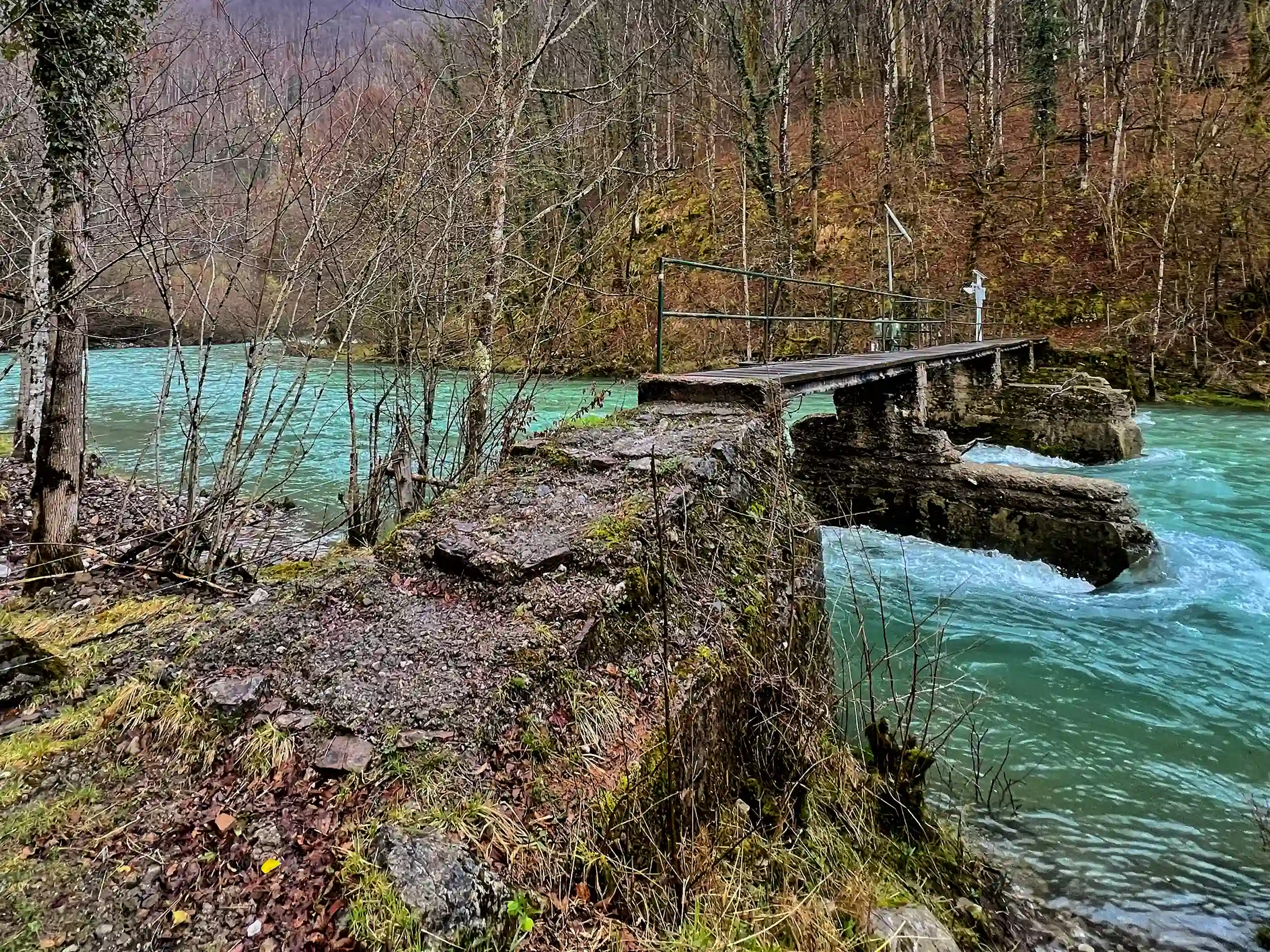
This itinerary along the Kolpa River, or Kupa in Croatian, is ideal for combining with visits to the Unica and Krka rivers. What they have in common are the graylings, the karst origin of the waters, the strong and unspoiled nature, and the pure beauty they exude.
Fly Fishing the Kolpa River, Slovenia – A Hidden European Jewel
Welcome to the Kolpa River—Slovenia’s wild southern frontier and one of the most pristine fly fishing destinations in Central Europe. Known as the Kupa on the Croatian side, this emerald ribbon of water runs deep through the untouched borderlands of Slovenia and Croatia.
It offers more than just world-class fishing. It delivers solitude, breathtaking beauty, and a raw connection with nature that is increasingly rare in Europe. For international fly anglers seeking unpressured waters, healthy wild fish populations, and an authentic experience, the Kolpa undoubtedly offers something unforgettable.
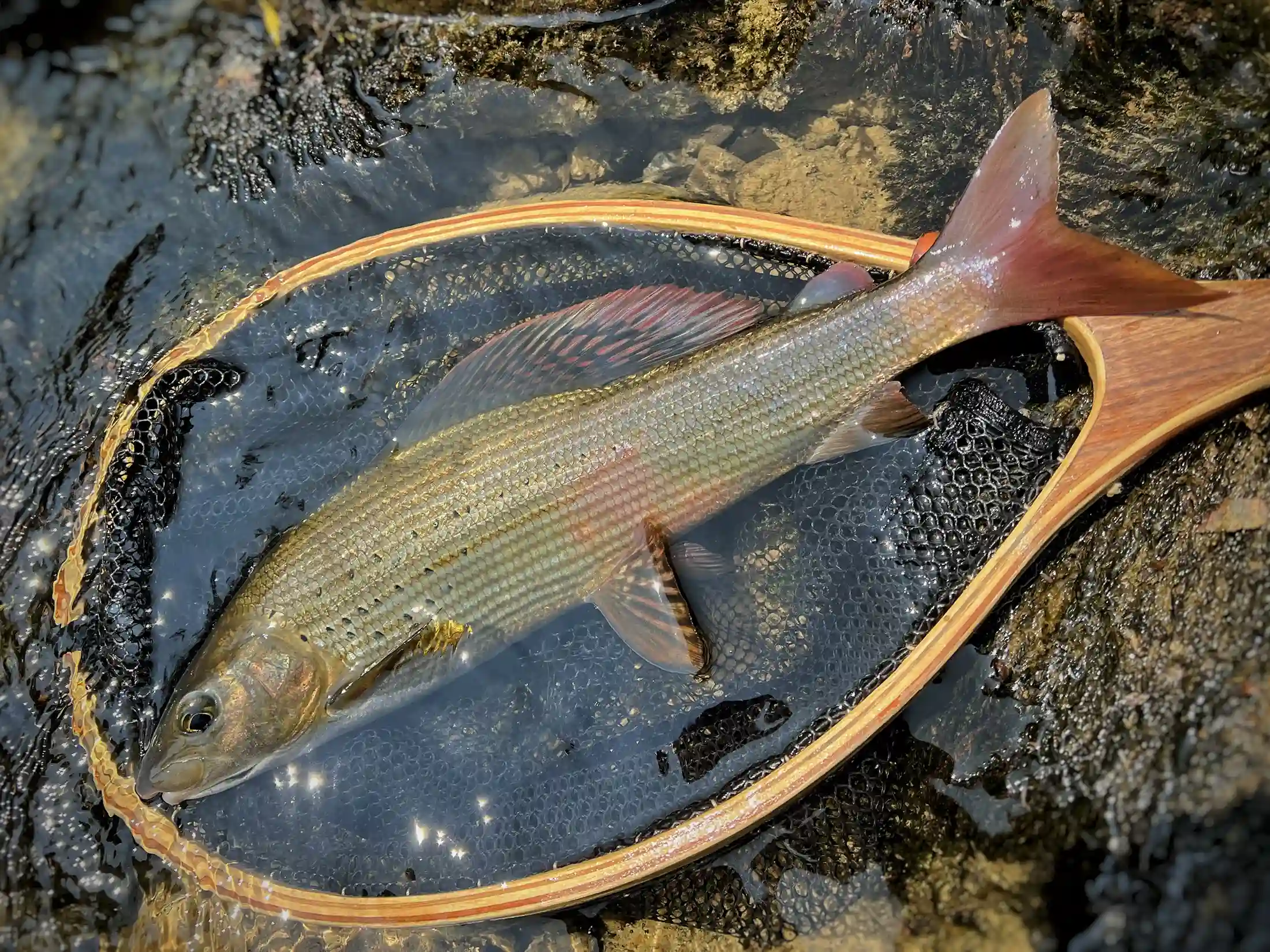
The Kolpa Valley is remote and very isolated. When you immerse yourself in it, you feel like you’re in the wilderness.
Kolpa River Source – Born in the Heart of Risnjak National Park
The Kolpa River begins in one of the most dramatic and beautiful settings imaginable — Risnjak National Park in Croatia. Indeed, at the foot of steep limestone cliffs, a powerful karst spring erupts from a dark cavern in the rock. Surrounded by ancient forests, this source pool shimmers with vibrant turquoise color and icy clarity. It clearly marks the start of the river’s long, meandering journey along the border of Slovenia and Croatia. Then, just meters from its origin, the Kolpa is already rich with life, its oxygenated waters flowing steadily through an untouched wilderness. The park itself is home to lynx, bears, and wolves, but the river remains calm, cold, and full of promise.
From its alpine source, the Kolpa flows west and then north into Slovenia’s Bela Krajina region. Despite the remote and highly isolated location, the distance from Ljubljana or Zagreb airports is absolutely reasonable. This is where the river softens, winding through fertile valleys, hidden meadows, and dense beech forests. Its upper course is fast and rocky, ideal for grayling and trout. As it flows downstream, it becomes more graceful, with long glides and glassy pools perfect for dry fly presentation. Here, time seems to stand still. The air smells of pine, and the only sound is the gentle riffle of water over stone.
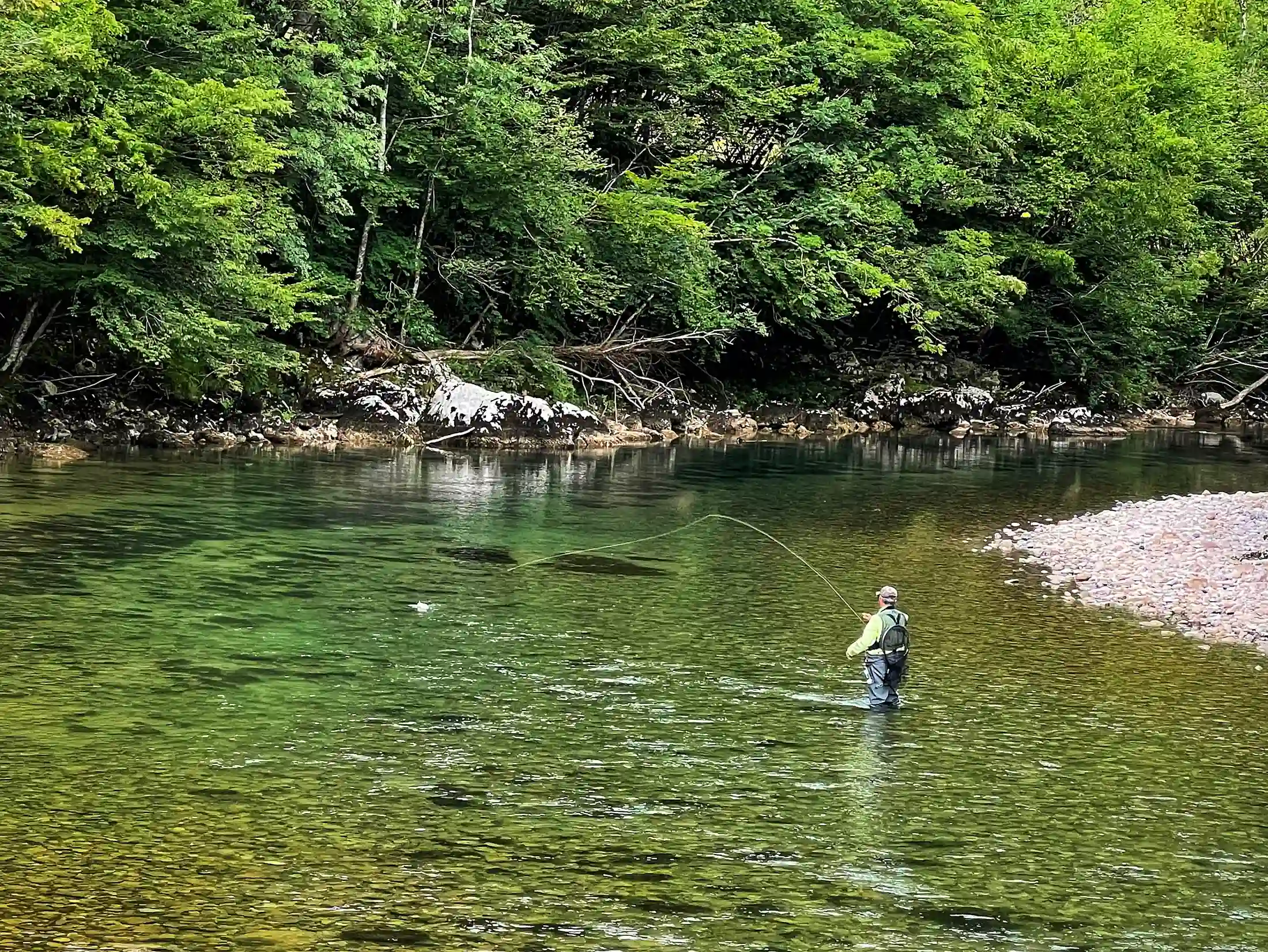
The Čabranka and Kupica tributaries offer interesting options for fly fishing. In this latter gem, only dry fly fishing is permitted.
A River Shaped by Karst and Fed by Pure Waters
The Kolpa is a textbook example of a karst river—born in limestone, filtered through underground caves, and crystal clear from source to mouth. Along with its water remains cool and clean year-round, a perfect environment for wild trout, grayling, and hucho. Tributaries such as the Lahinja, Čabranka, Bela, and Kupica, flow into it along its course, each one bringing a fresh pulse of cold, mineral-rich water that supports aquatic life. These feeder streams also offer hidden stretches of water for adventurous anglers seeking even more solitude and challenge.
Because of its unique geology, the Kolpa features a diverse structure—fast riffles and boulder gardens in the upper reaches, then slow meanders and undercut banks downstream. In addition, gravel beds, weed-lined channels, and deep pools hold fish throughout the seasons. The oxygen levels remain high even in summer, which means consistent insect hatches and reliable fish activity. For anglers who value river diversity, the Kolpa offers every type of fly fishing water in one system.
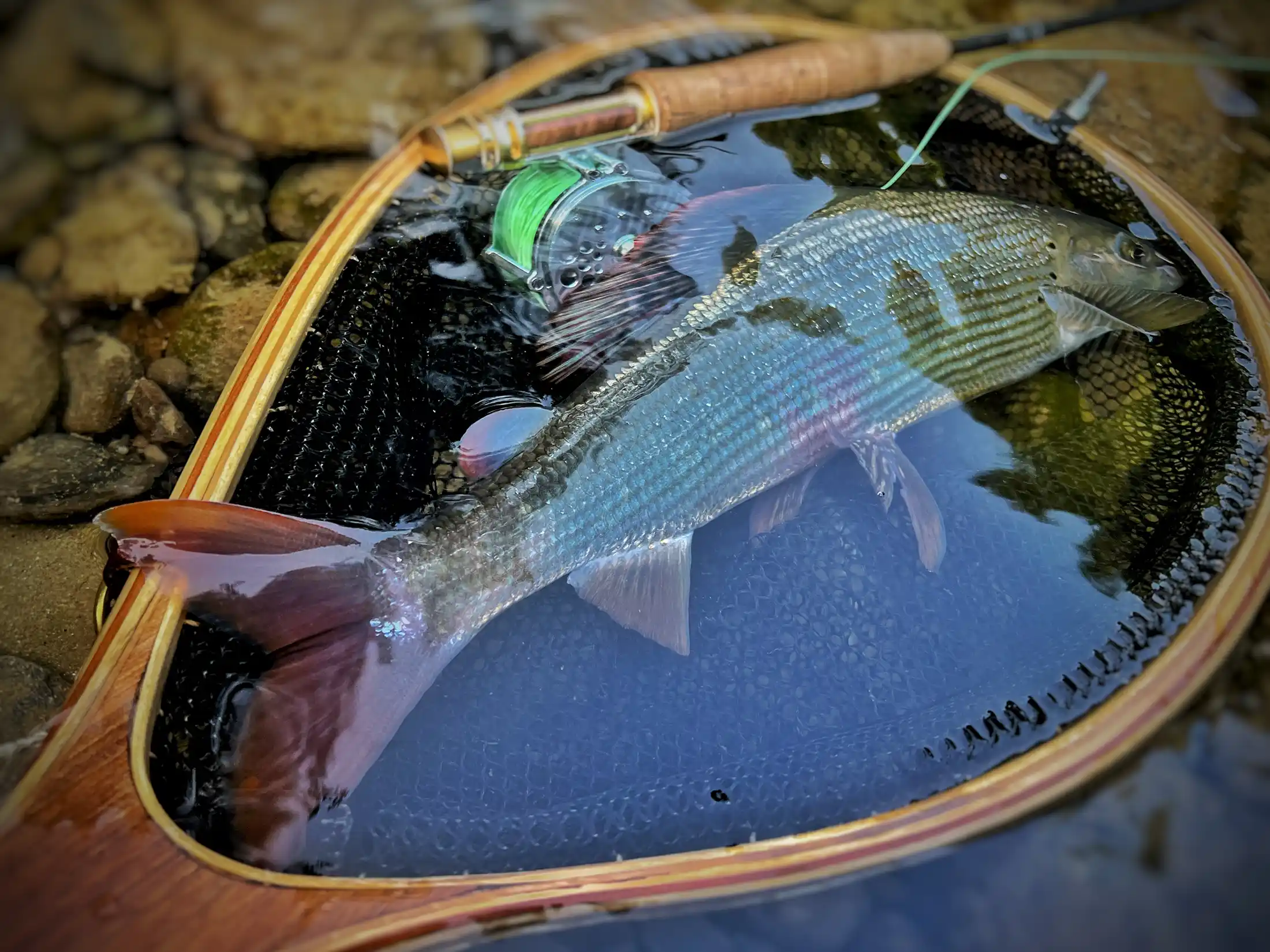
The fish population of the Kolpa, or Kupa, is varied and interesting for the fly fisherman: brown trout, grayling and hucho, the Danube salmon.
Wild Fish Populations – Trout, Grayling, and the Legendary Hucho
The Kolpa River without a doubt is a sanctuary for three iconic European freshwater species, each thriving in its ideal stretch of water. Indeed,iIn the upper reaches, brown trout are the undisputed rulers. These fish are entirely wild, born in the clean, gravel-bottomed tributaries that feed the river from surrounding hills. They grow up in fast, oxygen-rich water and then develop the strength and instincts of true river predators. In early spring, when insect life returns and flows stabilize, they rise eagerly to dry flies, offering exciting action in clear, shallow pools.
As the summer progresses and the water warms and drops, these trout grow cautious. They retreat to deeper runs and shaded undercuts, where they watch and wait. Anglers must adapt—long leaders, soft presentations, and well-matched imitations become crucial. While more challenging, the rewards are great: a strong, native trout taken from a river untouched by hatchery influence. The upper Kolpa offers fly fishing at its purest—technical, intimate, and deeply satisfying for those who appreciate wild fish and natural beauty.
Further downstream, grayling take the spotlight. Known for their elegance and sensitivity, these fish inhabit the middle sections of the river, especially where water depth increases and currents slow. Their large dorsal fins cut through the surface as they sip emergers and spinners with precision. Grayling demand finesse, especially on bright days. They are surely the perfect quarry for anglers who enjoy the technical side of the sport. Their population here is strong, with some fish reaching trophy size
But it’s the hucho, or Danube salmon, that stirs the imagination. This apex predator lurks in the Kolpa’s deeper pools and swift glides, hunting at dawn, dusk, or under cloud cover. Known for their explosive takes and violent fights, hucho can reach a meter in length and weigh more than 10 kg. They are rare, elusive, and protected by strict regulations—but for serious fly anglers, the challenge of hooking a hucho on a streamer in Slovenia’s remote southeast is an adventure of a lifetime.
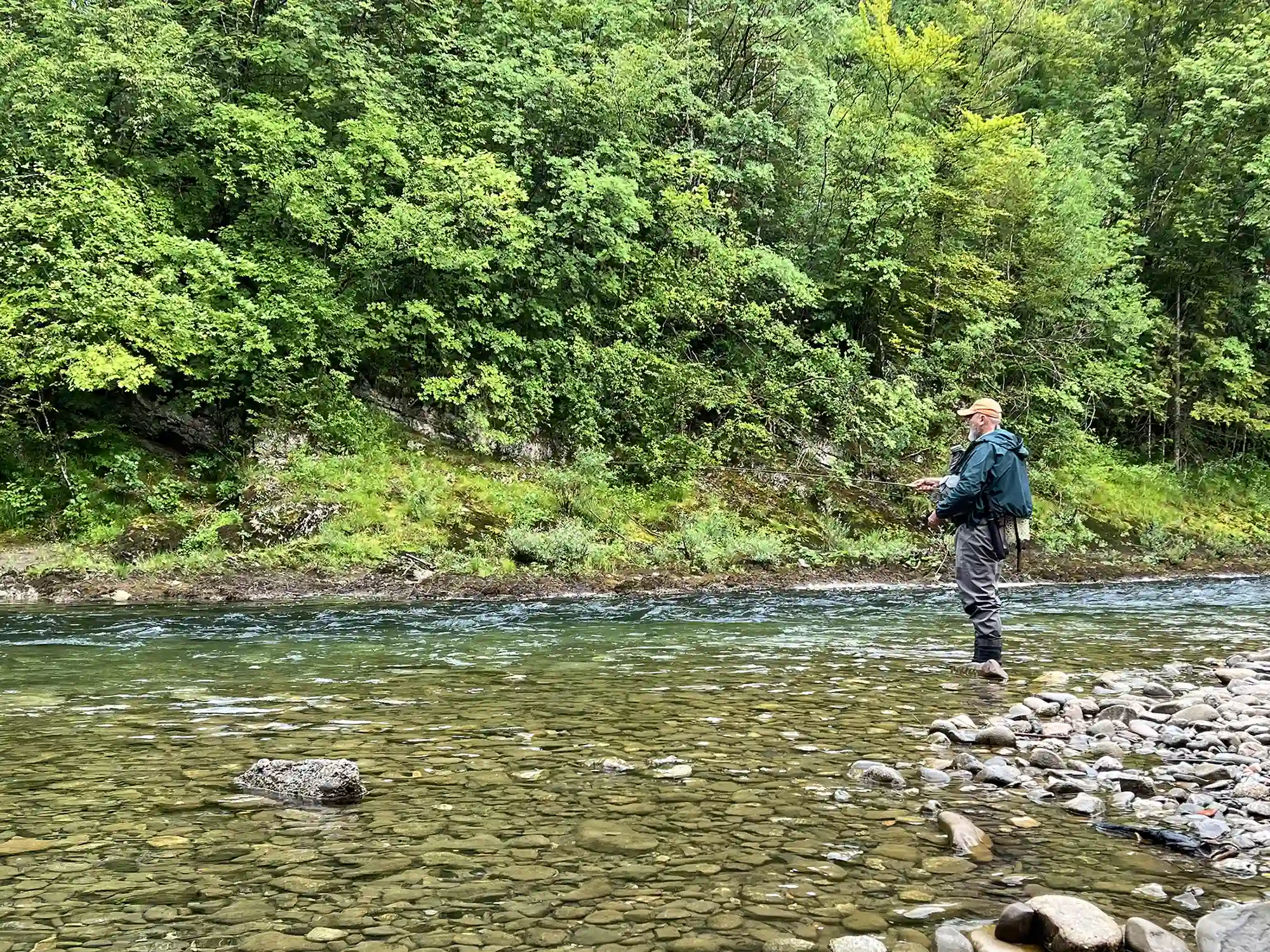
Autumn belongs to the most demanding angler. As temperatures drop, big trout and grayling start hunting more aggressively.
Insect Hatches and Local Fly Patterns – Timing is Everything
The Kolpa supports a thriving aquatic ecosystem, thanks to its oxygen-rich water and unspoiled habitat. In spring, Baetis and Blue-Winged Olives begin hatching in force, triggering surface feeding and dry fly heaven. As water temperatures rise, larger Ephemerella mayflies join the mix. Their long, elegant hatches are best approached with duns, spinners, and CDC emergers. This is the time when trout feed confidently, and accurate presentation can lead to explosive action.
Summer brings clouds of caddisflies, especially in the evenings. Elk Hair Caddis, sedge imitations, and floating pupae patterns are effective well into the night. Hot days are perfect for terrestrials—ants, beetles, and grasshoppers dropped beside the bank can bring big fish to the surface. Stoneflies appear in early summer as well, especially in the upper sections. Nymphing is consistently productive. Pheasant tails, and beadhead hare’s ears in natural tones often prove deadly in deeper runs and pocket water.
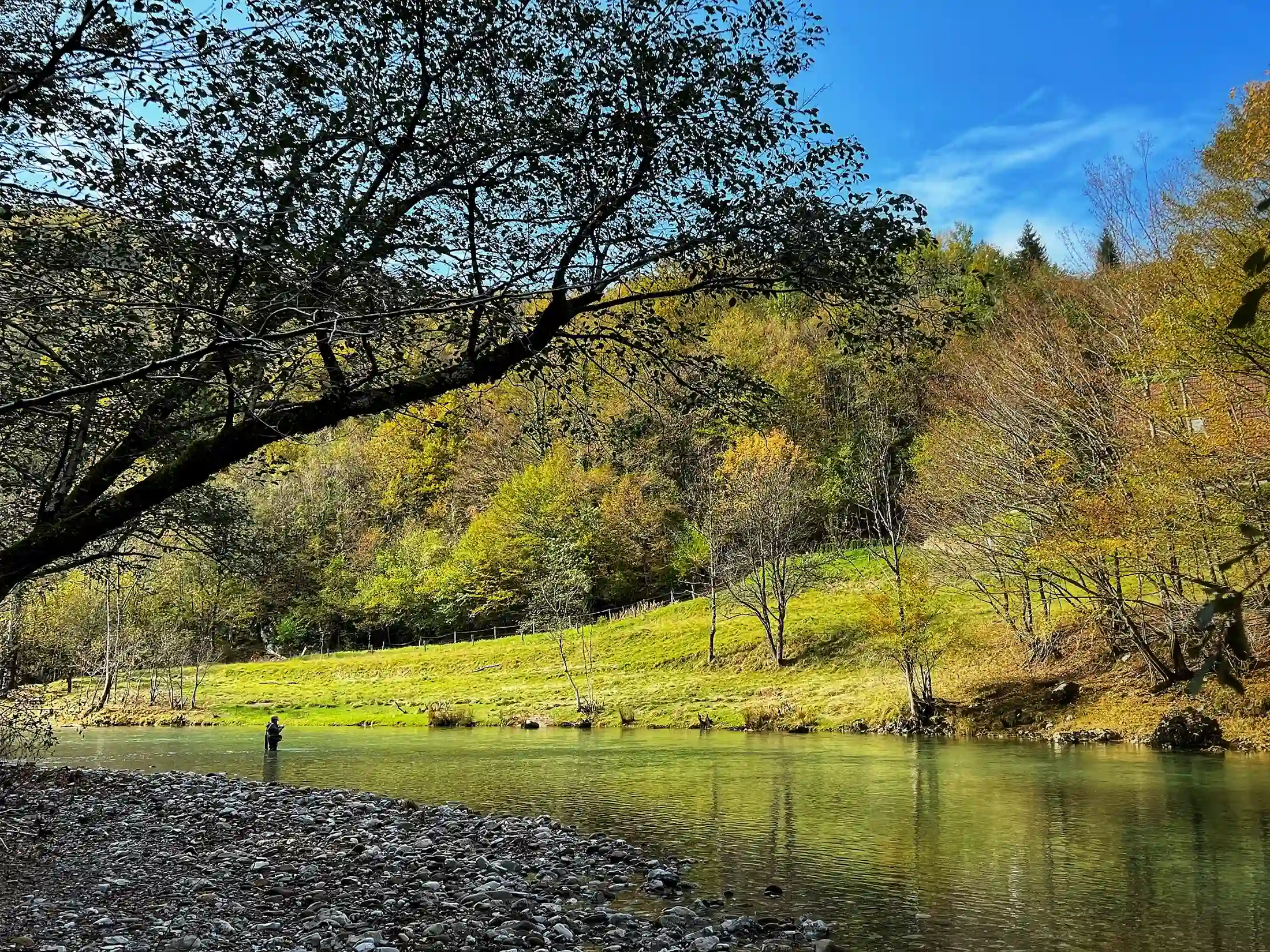
Entrusting your fishing adventure to a professional guide brings value, safety, and the certainty of always being in the right place.
Fishing with the champion! The Kolpa fly fishing experience can also be combined with a masterclass with multiple world champion Valerio Santi Amantini, in both private and group sessions.
Fishing Seasons, Guiding, and Conservation
The Kolpa fishing season begins in late March and ends in early November. During this time, trout and grayling are actively feeding, and conditions are ideal for dry fly and nymph techniques. The hucho season opens in October and continues through February, with strict permit control and designated catch zones. Fly fishing only is enforced in many areas, and catch-and-release is strongly encouraged to maintain the health of the river’s populations.
The river is divided into several areas and consequently the fishing permits system is a bit complex. Licenses can be obtained from local clubs, on both sides of the state border and from the park authority. Entrusting your fishing adventure to one of our professional guides is undoubtedly the best way to save time and have a safe experience. Guides provide invaluable insight, help navigate regulations, and greatly improve your chances of success—especially when reading this complex and ever-changing river.
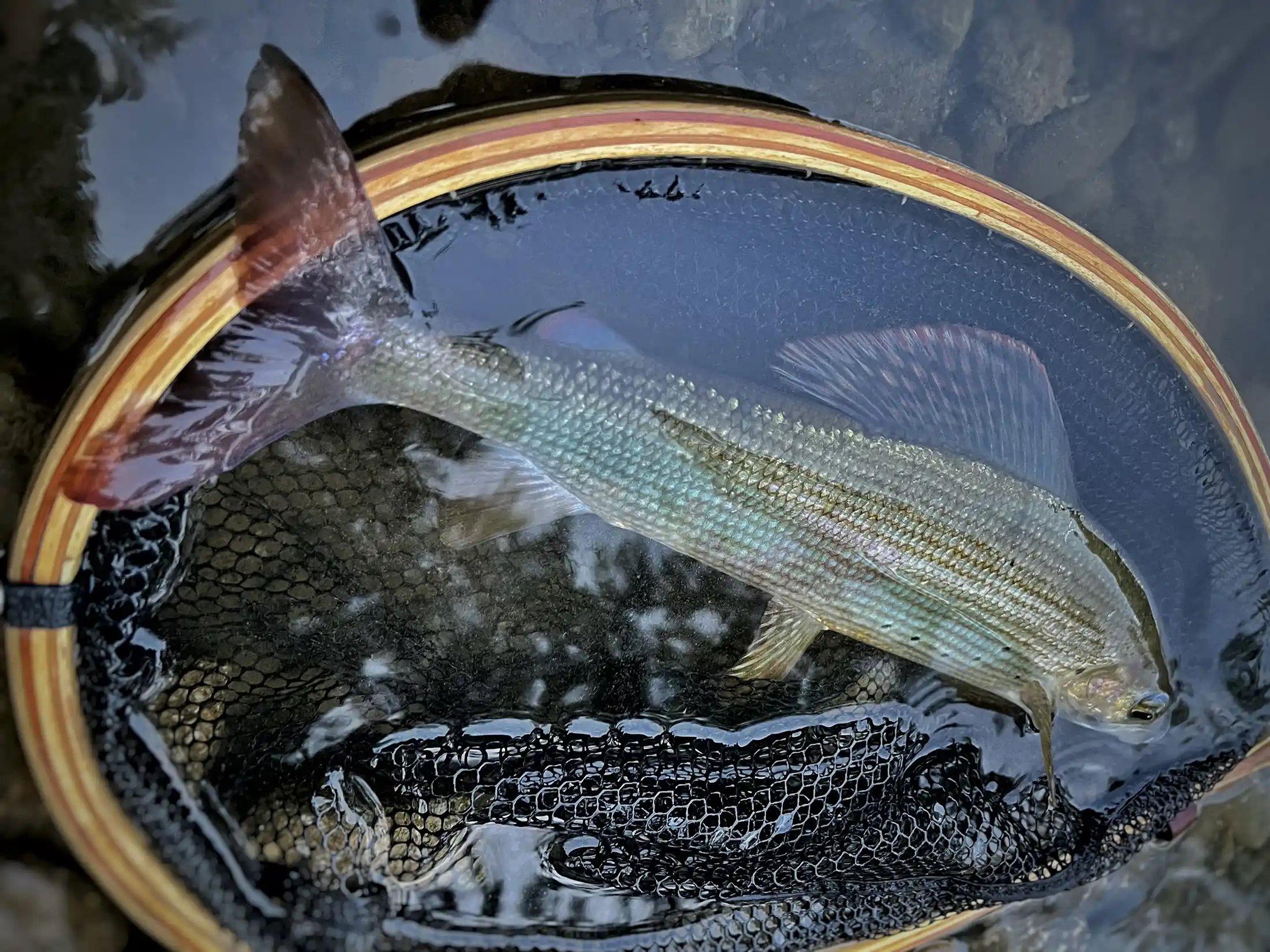
Few meters from the river Kolpa (or Kupa in Croatian), stands the ancient Zrinski Castle dating back to the 15th century. This castle if part of a larger interesting visit. There is the entire route and the Frankopan’s heritage to explore!
Travel, Culture, and the Bela Krajina Region
The Kolpa isn’t just about fly fishing. It’s a journey through one of Slovenia’s most culturally rich and scenic regions. The Bela Krajina valley, nestled along the Kolpa’s middle course, is famous for its folk traditions, music, and unique white birch forests. Stone churches and red-roofed villages dot the hillsides, and hand-embroidered costumes still appear in local festivals. The people here are warm, humble, and deeply connected to the land.
Historic sites include the hilltop Kostel Castle, which offers panoramic views of the river and nearby gorges. The town of Metlika, with its charming square, Metlika Win Cellar, Bela Krajina Museum Metlika, and artisan shops, is a must-visit. There are also several protected nature parks nearby with hiking trails, waterfalls, and rare bird habitats. If you’re traveling with family, the river’s warm summer water makes it ideal for canoeing, kayaking, and swimming. Adventure and relaxation exist side by side here.
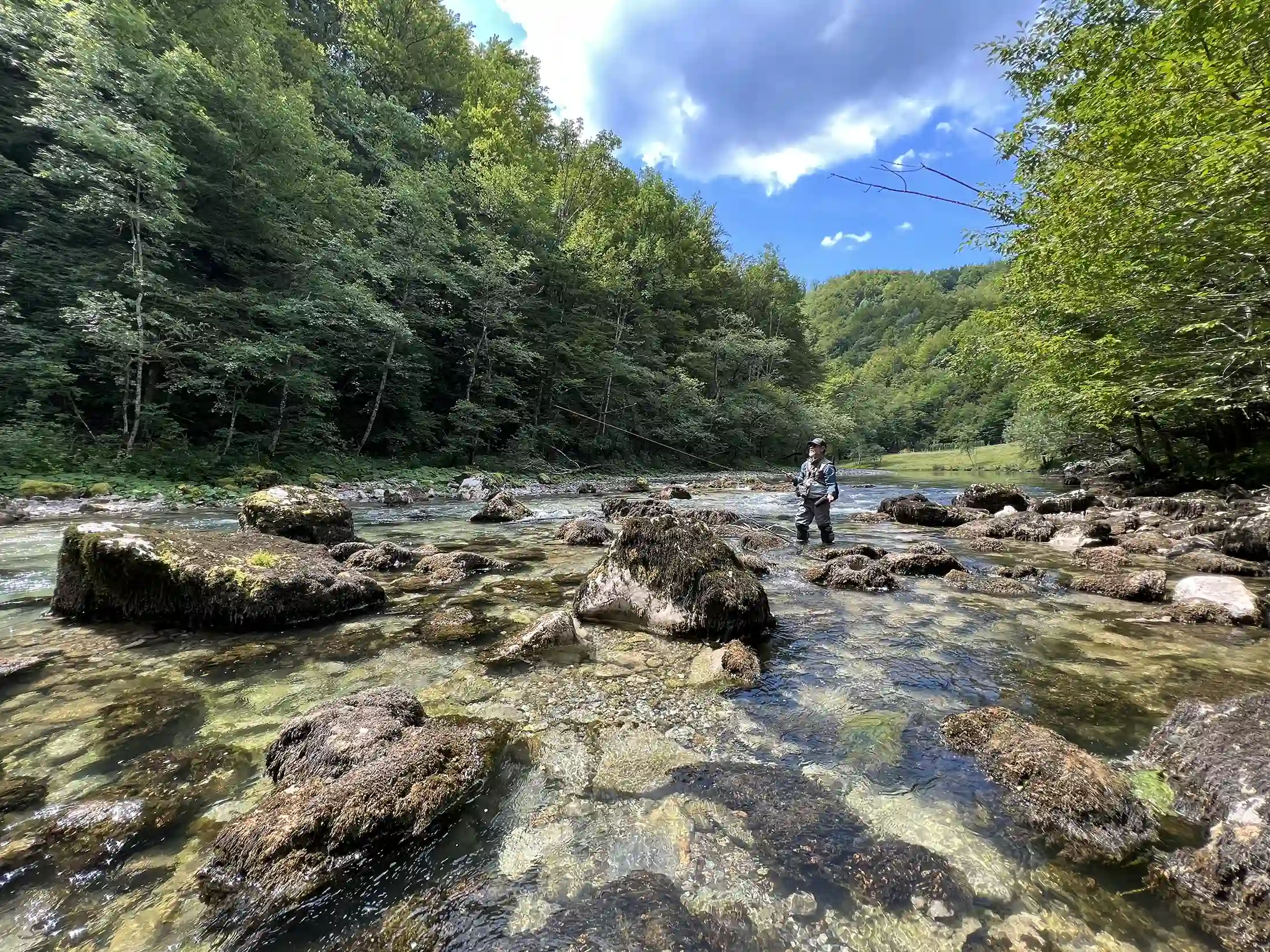
The Kolpa is more than a river. It’s a place where your cast matters, your time slows down, and every moment by the water feels earned. For international anglers looking for an authentic fly fishing experience—far from crowds and close to nature—this is the place. Wild fish. Wild river. True freedom.
Local Food and Wine – Slovenia’s Rural Soul
After a long day on the river, few things compare to sitting down to a meal of fresh, wood-grilled trout and a glass of local red wine. The cuisine in the Kolpa valley is rustic, hearty, and deeply satisfying. Try the traditional Belokranjska pogača—a warm, fluffy flatbread brushed with lard, garlic, and coarse salt. Local stews simmer for hours with beans, pork, and garden vegetables. Everything is made with care, from scratch, and often served in centuries-old farmhouses. It is possible to combine a day of guided fishing with lunch or dinner in a mountain hut, featuring local food on the grill, and possibly even a night’s stay in a tree house.
The region is also home to some excellent wines. The red Metliška črnina and white Belokranjec are crisp, earthy, and a perfect pairing with trout or porcini mushroom dishes. You’ll also find homemade honey, brandy, and herbal liqueurs that reflect centuries of countryside tradition. It’s more than just food—it’s a heartfelt invitation into the rhythms, flavors, and deep-rooted traditions of Slovenian and Croatian life. Getting to the Kolpa is refreshingly simple. From Ljubljana, Slovenia’s capital, it’s just a 90-minute drive through scenic valleys and rolling hills. Roads are quiet and well-maintained.


Fly Fishing Alpe Adria d.o.o.
Breznikova ulica 15
1230 Domžale
Slovenija
VAT: SI38765772
Follow Us


© 2025 All rights reserved Fly Fishing Alpe Adria